

From Concept to Completion: How Grafiscape Delivers Professional Signage & Office Branding Projects
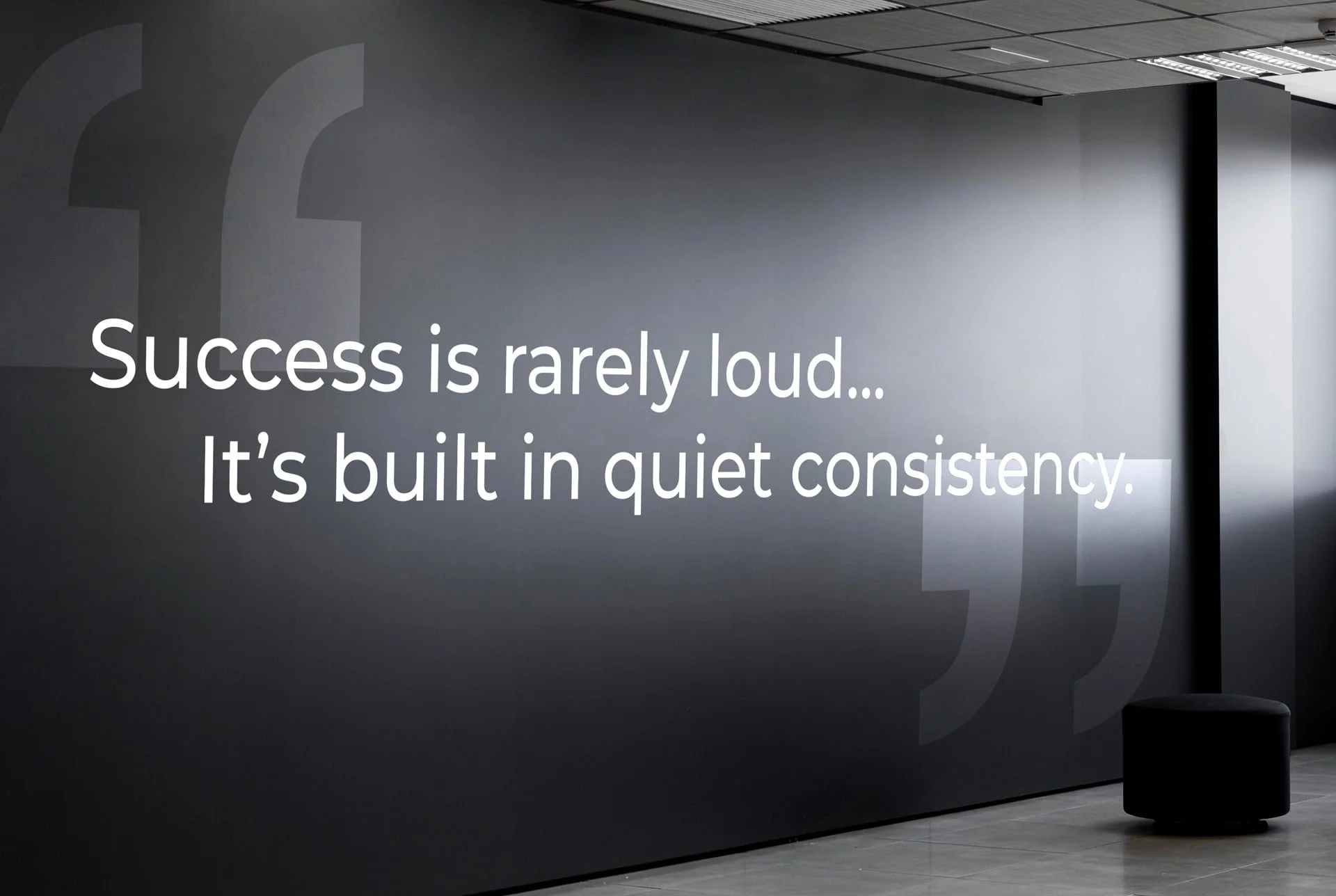
The finished sign, wall graphic or branded interior is only the visible part of a much larger process. Before anything is printed, manufactured or installed, decisions need to be made about the brief, design, materials, dimensions, surfaces, access, approvals and how the finished installation will perform within the space.
Those decisions matter because signage and interior graphics interact directly with the buildings in which they are installed. A wall graphic depends on the condition and paint system beneath it. An illuminated reception sign requires suitable fixings and an appropriately positioned electrical supply. Window manifestations need to work across the actual glazing, while architectural films must be specified for the surface, geometry and expected use. Even a relatively straightforward installation can involve considerations that are not immediately apparent from the finished artwork.
This is why we approach signage and interior branding as a complete project rather than simply the manufacture of individual products. Depending on the scope, that can involve initial consultation, site surveying, creative development, technical specification, artwork and visualisation, production, installation and ongoing care. It can also mean working alongside architects, interior designers, contractors, facilities teams, landlords and other specialists to make sure our work integrates properly with the wider environment.
Over time, that process has also taught us where projects are most likely to encounter difficulties. Inaccurate measurements, unsuitable wall finishes, late design changes, incomplete site preparation and unclear responsibilities can create problems that have little to do with the quality of the sign or graphic itself. Identifying those issues before production is usually considerably easier than resolving them once materials have been manufactured or an installation team is already on site.
This article explains how we approach that process at Grafiscape, what experience has taught us about delivering work in real environments, and the practical standards we apply from the first brief through to installation and aftercare. It is intended to provide a transparent look behind the finished project, including not only what we do, but why each stage matters and what clients can do to help achieve the best possible result.
Our Process: From Brief to Installation
A successful signage or interior branding project is usually determined before anything reaches production. The visible result may be a reception sign, wall graphic, window manifestation or architectural finish, but behind it sits a sequence of decisions about purpose, dimensions, materials, surfaces, access and installation. Getting those decisions in the right order reduces avoidable revisions and gives everyone involved a clearer understanding of what will actually be delivered.
At Grafiscape, that process begins with the brief and continues through consultation, survey, design, approval, manufacture, installation and handover.
Early coordination also helps distinguish items that are essential from those that can remain optional. When budgets or programmes are tight, priorities can be agreed before design time and procurement are committed.
For larger schemes, sequencing matters as much as specification. Graphics installed before decorating is complete can be damaged by following trades, while signage delivered before areas are accessible may require storage or repeat visits. Agreeing dependencies with the project team helps avoid both problems.
Understanding the Brief Before Choosing the Product
The first stage is understanding what the project needs to achieve. A request for “office signage” can describe anything from a single reception logo to a coordinated system of wall graphics, manifestations, wayfinding, architectural films and fabricated signage. Before specifying materials, it is important to establish where the elements will be installed, users, how long they need to last.
We therefore look at the objectives, brand requirements, premises and practical constraints before recommending a solution. Visibility, durability, available budget, expected lifespan and the condition of the installation area can all change the appropriate specification. An internal wall graphic in a low-traffic meeting room, for example, presents different requirements from graphics positioned in a busy corridor where people, furniture and cleaning equipment contact the surface.
The information available at this stage also affects the accuracy of the proposal. Dimensions, photographs, drawings, artwork, quantities and information about existing finishes allow the scope to be defined more reliably. Where information remains uncertain, this should be identified before manufacture rather than treated as an assumption that only becomes apparent on installation day.
When a Site Survey Adds Value
Not every project requires a site survey. If accurate drawings and photographs exist for a straightforward installation. More complex, bespoke or site-sensitive projects often benefit from an inspection before production begins.
A Grafiscape survey can verify measurements, inspect walls, glass, ceilings and other substrates, assess access and identify installation constraints.
For fabricated or illuminated signage, the survey may also consider fixing methods and electrical requirements. On refurbishment projects, it provides an opportunity to understand how our work interfaces with decorating, joinery, electrical works and other trades. This matters because signage is often installed towards the end of a programme, when correcting an unsuitable wall finish or adding a concealed electrical supply can be disproportionately disruptive.
A survey cannot expose every hidden condition. Concealed services, defects beneath finishes or inaccessible construction details may only become apparent later. Its purpose is to reduce uncertainty by recording what can reasonably be inspected and measured.
Turning the Specification Into Artwork
Once the scope and site conditions are understood, the project moves into design and artwork.
Artwork may include scaled layouts, positioning plans, colour and finish recommendations, signage schedules and visualisations showing how elements relate to the space. Samples or swatches can be useful where the appearance or texture of a material cannot be judged reliably from a screen.
This stage is not purely aesthetic. A design has to translate into physical dimensions, available materials and practical manufacturing methods. Large-format wall graphics may need to be divided into panels, fabricated lettering requires appropriate stroke widths and fixing space, and manifestations need to work across actual glazing dimensions.
The objective is to resolve these details while changes are still relatively simple to make.
Approval Is a Production Control
Before manufacture, the client receives the relevant artwork or proof for review. This is the point to check spelling, dimensions, quantities, colours, typography, positioning, finishes and specifications. Written approval confirms that the project can proceed on the basis shown.
This may appear administrative, but it is one of the most important controls in bespoke production. Signage and graphics are manufactured specifically for a project, so discovering an incorrect room name after a panel has been fabricated is fundamentally different from correcting it in artwork.
Clients should review proofs against the original brief rather than looking only at the appearance. Where several stakeholders are involved, comments are best consolidated before approval. Changes introduced after manufacture has started can affect materials, labour, programme and cost.
From Approved Artwork to Manufacture
Once artwork is approved and the required payment has been received, production can begin. The manufacturing route depends on the specification. Work may include large-format printing, cutting vinyl graphics, preparing architectural films, fabricating panels or dimensional lettering, producing illuminated components and preparing the fixings required for installation.
Bespoke manufacturing involves tolerances and natural material variation. Colour can appear different across printed, painted and fabricated materials, while texture, sheen and grain can vary between products or batches. Exact consistency across different manufacturing processes cannot always be assumed, which is why samples and clearly agreed specifications are useful where matching is particularly important.
Production lead times depend on scale, complexity, material availability and specialist manufacturing requirements. Installation planning normally begins while production is progressing, allowing materials and manufacturing status to be considered before a firm site date is agreed.
Preparing the Site for Installation
A well-manufactured product still depends on a suitable installation environment. Before the agreed date, installation areas should be safe, accessible and sufficiently complete for the work to proceed. Furniture and movable equipment should be cleared where possible, while walls, glass and other surfaces should be clean, dry, stable and appropriately prepared.
Wall condition is particularly important for adhesive graphics. Cracks, filler marks, texture and uneven paintwork can remain visible beneath the finished installation. Certain silicone-based, stain-resistant or anti-graffiti coatings can reduce adhesion. Newly painted surfaces need sufficient curing time according to the paint manufacturer’s guidance before films are applied.
Projects involving illuminated signage may require an electrical supply to be installed in advance. Landlord consent, planning requirements or building-management approvals should be resolved before installation.
Installation, Inspection and Handover
Installation is where the preceding decisions come together. Depending on the project, work may involve applying graphics, aligning large printed panels, installing manifestations, wrapping architectural surfaces or mechanically fixing fabricated signage and lettering.
Occupied workplaces introduce additional considerations. Access times, noise, dust and movement may require phased or out-of-hours installation. Coordination beforehand allows these constraints to be managed without treating them as unexpected site problems.
Once installation is complete, the finished work should be inspected promptly. Any concerns can then be recorded and investigated while the project information and site conditions remain current. From that point, care and maintenance become part of protecting the finished installation.
The process is deliberately structured because each stage protects the next. A clear brief supports an appropriate specification; an accurate survey supports reliable artwork; careful approval supports correct manufacture; and proper site preparation supports a successful installation. The finished sign or graphic may be the visible outcome, but its quality depends on the decisions made throughout the project.
Our Journey: Experience Built Through Real Projects
Signage and interior branding become considerably more complex once a design leaves the screen and enters a real building. Walls are rarely perfectly flat, dimensions can change during refurbishment, access is not always straightforward, and the material originally imagined for a project may not be appropriate for the surface on which it needs to be installed.
Experience in this sector is therefore less about knowing how to produce a particular sign and more about understanding the relationship between design, materials, buildings and installation. Grafiscape's approach has developed around those practical realities. Each project adds another set of conditions to consider, from how a painted wall accepts an adhesive film to how an installation can be coordinated around employees working in an occupied office.
Looking Beyond the Finished Product
Clients naturally focus on the visible result. They may want a reception logo, branded meeting rooms, wall graphics, manifestations or a complete environmental graphics scheme. From a delivery perspective, however, the finished appearance is only one part of the specification.
A wall graphic depends on the condition and finish of the wall beneath it. Fabricated lettering depends on suitable fixing points and enough physical space for installation. Illuminated signage requires power in the correct location. Architectural films must be compatible with the substrate and sufficiently conformable for the shapes being covered.
These considerations explain why two visually similar projects can require different solutions. A material that performs well on smooth painted plasterboard may be unsuitable for heavily textured paint. A film appropriate for a flat panel may not be the correct choice for wrapping detailed joinery with corners, recesses and returns.
Understanding those differences is an important part of developing a reliable specification.
Learning What Can Go Wrong Before Installation
Many of the problems encountered during signage projects originate outside the signage itself. Poorly bonded paint, incomplete decorating, inaccurate dimensions, inaccessible installation areas and changes by other trades can all affect the finished work.
Walls are a particularly useful example. Self-adhesive graphics depend on the stability of the coating beneath them. If the paint itself has poor adhesion to the wall, the graphic cannot correct that underlying weakness. Removing application tape or repositioning material may expose a problem that was already present within the surface.
Paint chemistry can create less obvious difficulties. Some silicone-based, stain-resistant and anti-graffiti coatings are designed specifically to resist substances adhering to them. That can be useful for maintaining a wall but less useful when the intention is to apply an adhesive graphic.
Experience changes the conversation from simply asking, “What vinyl should we use?” to asking whether the surface is suitable for vinyl in the first place.
Working Within Refurbishment and Fit-Out Programmes
Office branding frequently forms part of a larger project rather than an isolated installation. Architects, interior designers, fit-out contractors, electricians, decorators, facilities teams, landlords and building managers may all influence when and how the work can proceed.
Grafiscape can work from an established design package, artwork or signage schedule, but involvement before finishes are completed can identify practical requirements that would otherwise appear much later.
A reception sign provides a simple example. If dimensional lettering is to be illuminated, the electrical supply needs to emerge in an appropriate location and cables may need to remain concealed. Establishing this while electrical and decorating works are underway is considerably easier than discovering the requirement after the reception wall has been completed.
The same principle applies to wall preparation, fixing points and access. Graphics and signage may be among the final visible elements installed, but some of their requirements need to be considered much earlier.
Working With Existing Designs and Specifications
Not every project requires Grafiscape to create the design. Architects, interior designers and internal brand teams may already have developed the visual concept, with our role focused on translating that concept into something that can be manufactured and installed.
That translation can involve reviewing dimensions, materials, panel divisions, fixing methods and artwork quality. A design may be visually resolved while still requiring technical development for production.
Large-format graphics illustrate this well. An artwork may cover an entire wall, but the physical material has manufacturing widths and needs to be divided into manageable sections. Joins must be considered in relation to important visual elements, while installation requires allowances for trimming and site conditions.
The objective is not to unnecessarily change the creative idea. It is to find a practical route for producing it while preserving the intended appearance as closely as the materials and environment allow.
Specifying for the Application Rather Than the Product
One of the most useful lessons in signage and graphics is that there is rarely a universally “best” material. Suitability depends on the application.
A specification should consider whether the installation is internal or external, temporary or long-term, frequently touched or largely decorative. It should account for the substrate, environmental conditions, cleaning regime, expected lifespan and whether the product may eventually need to be removed or updated.
Budget matters as well, but the cheapest initial material is not necessarily the least expensive option over the life of an installation. Equally, the highest-specification product is not automatically justified for every application.
A short-term internal graphic on a smooth surface may not require the same film as a long-term architectural wrap. Conversely, reducing the specification on a demanding surface to save a relatively small amount during production can create disproportionate replacement costs if the installation fails prematurely.
The aim is to match the specification to the conditions rather than force every project into the same product range.
Recognising the Limits of Materials and Manufacturing
Part of professional advice is explaining what materials cannot reliably do.
Printed colour, for example, can vary when reproduced across vinyl, wallcovering, painted panels, acrylic and other substrates. Different manufacturing processes, surface finishes and lighting conditions affect how the same nominal colour is perceived. An exact visual match across unrelated materials cannot always be guaranteed.
Physical materials also move. Acrylic can expand and contract with temperature changes. Vinyl can experience small amounts of shrinkage or edge tension over time. Printed panels and architectural finishes have manufacturing tolerances, while hand-finished installations can contain minor variations in joins, trimming and positioning.
These characteristics should not be hidden until a client notices them. Setting realistic expectations during specification and approval creates a clearer distinction between normal material behaviour and an actual manufacturing or installation defect.
Finding Alternatives When the Original Specification Does Not Work
Projects do not always progress exactly as first imagined. A preferred material may be unavailable, the proposed finish may not suit the substrate, or the initial specification may exceed the available budget.
The useful response is not simply to remove elements until the price fits. Alternative materials, construction methods, dimensions, finishes or installation approaches can often achieve the same underlying objective differently.
For example, a fabricated element might be simplified without losing its visual hierarchy, or a different graphic material might provide an appropriate finish for a less demanding area. In other situations, retaining the higher specification in prominent or heavily used areas while simplifying secondary locations can be more sensible than reducing quality uniformly across the entire project.
This requires understanding what the client is actually trying to achieve rather than treating the original product description as the objective itself.
Experience Means Asking Better Questions Earlier
The most useful knowledge gained from delivering signage and interior branding projects is often reflected in the questions asked before production begins.
Is the wall actually ready? Has the paint cured? Who supplied the dimensions? Is the landlord's approval required? Will power be available before the sign arrives? Can installers access the area safely? Are other contractors still working nearby? How will the product be cleaned? Does the information displayed need to change in the future?
Individually, these are straightforward questions. Collectively, they determine whether a project moves smoothly from artwork to installation or encounters avoidable problems along the way.
That is how Grafiscape's process continues to develop. Experience is applied not by treating every project as something seen before, but by recognising where apparently small details can influence the finished result and addressing them while there is still time to make an informed decision.
The Standards Behind Every Project
A signage or interior branding project does not finish when the installation team leaves site. How the work performs over the following months and years depends on the original specification, the condition of the building, the way products are maintained and whether the installation continues to be used as intended.
For that reason, Grafiscape treats preparation, technical limitations, client responsibilities, installation tolerances, maintenance and aftercare as part of the project rather than small-print considerations at the end. Being clear about these factors helps establish realistic expectations and, more importantly, gives the finished work the conditions it needs to perform properly.
Suitable Surfaces Are Fundamental to Performance
Graphics and architectural finishes rely on the surface beneath them. A high-quality film cannot compensate for unstable paint, damaged plaster, contamination, moisture or a poorly prepared substrate.
Walls intended for self-adhesive graphics should generally be clean, dry, stable and fully cured. Cracks, dents, filler marks and changes in texture can remain visible after installation because flexible graphic materials naturally follow the contours of the underlying surface.
Paint compatibility is particularly important. Certain silicone-based, stain-resistant and anti-graffiti coatings can reduce adhesive performance, potentially causing graphics to lift or peel. Newly decorated walls also need sufficient time to cure before adhesive products are installed. Cure periods vary between paint systems, so the manufacturer's technical guidance should always take precedence. As a general project-planning allowance, Grafiscape recommends at least seven days unless the relevant manufacturer specifies otherwise.
Where suitability is uncertain, identifying the paint system and testing the proposed material before production can be more valuable than attempting to solve an adhesion problem after installation.
Site Preparation Is a Shared Part of Project Delivery
The installation team can control the quality of its own work, but it cannot control every condition within the building. Successful delivery therefore depends on clear responsibilities between Grafiscape, the client and any other contractors involved.
Unless specifically included within the agreed scope, walls, ceilings, glass and other installation surfaces should be appropriately prepared before the installation date. Furniture, stored materials and equipment should be removed where they prevent safe access. Areas also need suitable lighting, temperature and sufficient working space for the installation method being used.
On fit-out projects, preceding works should be sufficiently complete before graphics or signage are introduced. Installing finished graphics while decorating, joinery or other construction activity continues nearby increases the possibility of damage and can make accurate installation unnecessarily difficult.
Access is equally important. Security procedures, parking and loading arrangements, inductions, permits and restrictions on working hours should be identified in advance. If the premises remain operational, the project may need to be phased or completed outside normal working hours to minimise disruption.
Permissions and Supporting Works Need Clear Ownership
Some signage projects involve requirements outside the graphics contractor's direct control. External signage may require planning consent, while internal works in leased premises can require landlord or building-management approval.
These permissions should be established before manufacture or installation is committed wherever possible. Producing a bespoke sign before discovering that the landlord will not approve its position or fixing method creates a problem that careful coordination could have prevented.
Illuminated signage introduces similar dependencies. Unless electrical works form part of the agreed scope, an appropriate supply needs to be provided by a qualified electrical contractor in the correct location before installation. Final electrical testing and certification should also have clearly defined responsibility.
The same principle applies throughout the project: assumptions are more likely to create delays than clearly assigned responsibilities.
Understanding Normal Manufacturing and Installation Tolerances
Bespoke signage and graphics are manufactured and installed to agreed specifications, but they are physical products rather than digital artwork. Materials and manufacturing processes naturally introduce small variations.
Colour is one example. A corporate colour reproduced as a large-format print may appear slightly different from the same colour produced in paint, acrylic, vinyl or another manufactured finish. Surface texture, sheen, lighting conditions and production methods all influence perception. Even separate production batches of the same material can occasionally show minor differences.
Large wall graphics may contain panel joins. Architectural films are fitted and trimmed manually around physical features. Dimensional lettering and fabricated components are positioned on real walls that may themselves contain slight dimensional variation.
Minor differences in panel alignment, trimming, positioning, texture, print density or fabrication dimensions can therefore occur within normal production and installation tolerances. They do not automatically indicate a defect.
This is also why approved samples and digital visualisations should be understood correctly. They establish the intended specification and appearance, but a screen cannot reproduce every physical characteristic of a manufactured material or the lighting conditions of the finished space.
Client Approval Protects Both Sides of the Project
Before production, clients should carefully review the supplied proofs and specifications. Approval should cover more than whether the design is visually appealing.
Spelling, grammar, dimensions, quantities, colours, positioning, materials, finishes and room or directional information should all be checked. Where artwork has been supplied by the client, ownership and appropriate commercial licences for logos, photography, illustrations, fonts and other intellectual property should also be confirmed.
Once bespoke manufacture has begun, correcting an approved detail may mean remaking the affected product rather than simply editing a file. A structured approval process therefore protects the project programme and budget while creating a clear record of what has been authorised for production.
Handover Is the Beginning of Aftercare
Once installation is complete, the client should inspect the finished work as soon as reasonably possible. Any concerns can then be identified while the project is still current and, where appropriate, investigated or included within snagging.
Newly installed products also need time to settle. As a general guide, signage and graphics should not be cleaned, pressed, adjusted or unnecessarily handled for approximately 48 to 72 hours unless project-specific guidance states otherwise.
Wet-applied window films can take considerably longer to reach their final appearance. Small water bubbles, slight cloudiness or hazing may remain visible while moisture evaporates from beneath the film. Depending on the product and environmental conditions, this process can continue for several weeks and does not necessarily indicate a failed installation.
Maintenance Should Match the Product
Most interior signage and graphics require relatively simple maintenance, but inappropriate cleaning can shorten their useful life.
Vinyl graphics and window films should normally be cleaned gently using a soft, lint-free cloth and a mild, non-abrasive cleaning product suitable for the surrounding surface. Abrasive pads, scrapers, strong solvents, steam cleaning and excessive pressure around edges or joins should be avoided.
Signs, panels and dimensional lettering should similarly be cleaned without aggressive chemicals or concentrated heat. Individual components should not be pulled, twisted or repositioned. Materials such as acrylic naturally experience small amounts of expansion and contraction as temperatures change.
Facilities teams, cleaners, decorators and other contractors should be made aware of installed graphics and signage. Damage frequently occurs not during ordinary use but during subsequent maintenance, furniture moves, decorating or other works around the installation.
Regular Inspection Helps Identify Problems Early
Maintenance should include occasional visual inspection rather than cleaning alone. Clients should look for unusual movement, lifting edges, loose components, cracking, impact damage or excessive wear.
External and post-mounted signs warrant particular attention because they experience weather, temperature changes and greater environmental exposure. Checks are sensible following particularly severe weather or known impact. Vegetation and debris should also be prevented from obscuring or interfering with signage.
Glass manifestations used for visibility or safety should remain intact, clearly visible and unobstructed. Changes to blinds, furniture, lighting, partitions or surrounding graphics can alter the visual background and should prompt another check of whether the manifestation remains effective.
Where a sign appears loose, unstable or potentially unsafe, it should not be adjusted by unqualified personnel. The immediate area should be kept clear where appropriate and the installation assessed by a competent signage professional.
Warranty Works Alongside Appropriate Care
Grafiscape provides a 12-month warranty covering relevant manufacturing and installation defects from practical completion unless a different arrangement applies to a particular product. Some materials or components may also carry separate manufacturer warranties subject to their own conditions.
A warranty cannot reasonably cover every event affecting a product after installation. Accidental impact, vandalism, unsuitable cleaning, third-party alterations, structural movement, moisture ingress, unsuitable substrates and failure to maintain an installation can all affect performance independently of the original manufacture or workmanship.
Clear warranty boundaries are therefore part of responsible specification rather than an attempt to avoid responsibility. They distinguish genuine product or installation faults from subsequent building conditions, accidental damage and normal material behaviour.
Good Standards Extend Beyond Installation Day
The standards behind a signage and interior branding project are ultimately about controlling what can reasonably be controlled. Accurate information, suitable materials, prepared surfaces, documented approvals and professional installation create the foundation. Appropriate maintenance and periodic inspection help protect that work afterwards.
No supplier can eliminate every variable within a building or prevent every future change to an installation. What can be done is to identify foreseeable risks, explain responsibilities clearly and provide practical guidance throughout the life of the project.
For Grafiscape, that continuity from specification through to aftercare is an important part of how projects are approached. The objective is not simply for signage and graphics to look right when photographed on completion, but for the decisions behind them to remain appropriate once the space returns to everyday use.
If you are planning signage or interior branding and would like to discuss how these principles apply to your project, you can share your requirements with Grafiscape. We can review your drawings, suggest appropriate specifications and outline likely lead times before any commitment.
