

General Maintenance Tips for Signage, Graphics and Architectural Finishes
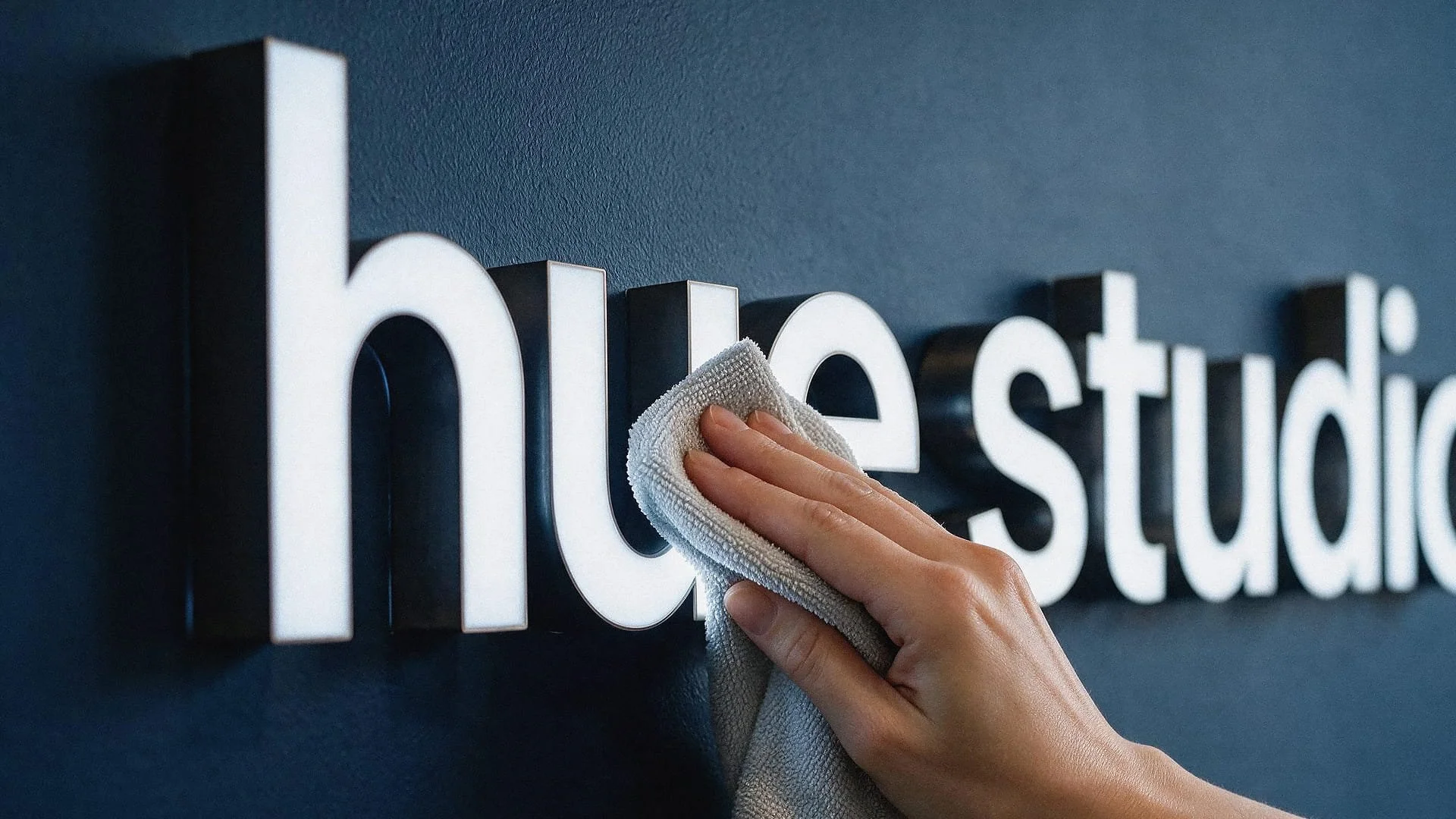
Signage, wall graphics, window manifestations and architectural finishes are designed to function as part of the environment in which they are installed. Although most require relatively little routine maintenance, their appearance and performance can be affected by cleaning methods, physical damage, environmental conditions and subsequent work carried out around them.
Good maintenance does not require constant intervention. In many cases, the most effective approach is simply to use appropriate cleaning methods, carry out periodic visual checks and respond to small problems before they develop further. Different products and environments have different requirements, however, so any project-specific care instructions should always be followed alongside general guidance.
Key Takeaways
Newly installed signage and graphics should generally be left undisturbed for 48 to 72 hours, while wet-applied window films may require several weeks for residual moisture and hazing to disappear fully.
Most signage and interior graphics need gentle rather than intensive cleaning. Soft, lint-free cloths and mild cleaners are preferable to solvents, abrasive pads, scrapers, steam cleaning or excessive pressure.
Maintenance should include periodic visual inspections for lifting edges, movement, loose components, impact damage and deterioration, with external signage receiving additional checks after severe weather.
Changes to furniture, blinds, lighting or partitions can affect the visibility of glass manifestations, so safety-related manifestations should be reassessed when the surrounding environment changes.
Facilities teams, cleaners and contractors should know what specialist graphics and finishes are installed, as inappropriate cleaning, decorating and maintenance work can cause avoidable damage.
Allow New Installations Time to Settle
Newly installed signage and graphics should be given time to settle before routine cleaning begins. As a general guide, avoid cleaning, pressing, adjusting or unnecessarily handling new installations for approximately 48 to 72 hours unless advised otherwise.
Wet-applied window films can take considerably longer to reach their final appearance. During the drying process, small water bubbles, slight cloudiness or hazing can sometimes remain visible beneath the film. This is normally residual moisture rather than a defect and should gradually disappear as the installation dries.
Depending on the material, temperature and environmental conditions, this process can take several weeks. Avoid attempting to lift the film or otherwise interfere with it during this period. If its appearance does not improve or something looks unusual, seek advice before attempting corrective work.
Use Appropriate Cleaning Products
Most signage and interior graphics can be maintained using relatively simple cleaning methods. A soft, clean, lint-free or microfibre cloth with a mild, non-abrasive cleaning solution suitable for the installed material will generally be sufficient.
Avoid aggressive chemicals, abrasive pads, scrapers and other cleaning methods that could scratch, soften or otherwise damage the surface. Strong solvents can affect printed graphics, adhesives, acrylics and decorative finishes, even where the surrounding wall or glass would tolerate the same product.
Cleaning products should never be assumed to be suitable simply because they are routinely used elsewhere in the building. Where a new product is being introduced, test it first on a small, inconspicuous area and check for changes to colour, texture, sheen or adhesion before cleaning the complete installation.
Clean Graphics Carefully Rather Than Aggressively
When cleaning wall graphics, vinyl graphics and window films, begin at the top and work downwards. This prevents contaminated water from repeatedly passing across areas that have already been cleaned.
Use light pressure and pay particular attention around exposed edges, joins and detailed cut areas. These parts of an installation can be more vulnerable to repeated aggressive cleaning than the main face of the material.
Do not allow cleaning solution to remain on the graphic unnecessarily or dry onto the surface. Remove residues using clean water where appropriate and dry the installation thoroughly with a clean microfibre cloth.
Routine cleaning should remove ordinary dust and contamination without requiring excessive scrubbing. If contamination cannot be removed using normal methods, establish what the material is before progressing to a stronger cleaning product.
Treat Matte, Textured and Specialist Finishes Differently
Architectural films and specialist decorative finishes should not automatically be maintained in the same way as conventional gloss graphics.
Waxes and polishes can alter the appearance of matte and textured surfaces, creating unwanted glossy areas or an inconsistent finish. Abrasive brushes and aggressive cleaning chemicals can similarly change the surface texture or damage printed and decorative layers.
Where a specialist finish has been installed, retain the relevant care information and make it available to whoever is responsible for cleaning the premises. If the appropriate cleaning method is uncertain, confirm the product specification before applying unfamiliar chemicals.
Establish a Cleaning Schedule That Reflects the Environment
There is no single cleaning frequency suitable for every installation. A graphic positioned in a quiet meeting room experiences very different conditions from signage beside a busy entrance, reception desk, kitchen or circulation route.
For regularly occupied interiors, checking graphics and signage as part of the normal cleaning programme provides a sensible starting point. High-contact and high-traffic areas may require more frequent attention, while decorative elements positioned away from occupants may need cleaning considerably less often.
The objective should be to remove contamination before it becomes difficult to clean rather than repeatedly cleaning an installation that does not need it. Facilities teams should adapt the schedule according to actual use, environment and material.
Take Additional Care With Window Films and Manifestations
Window manifestations and decorative films should be cleaned gently once they have fully settled. Scrapers, blades and abrasive tools should not be used across applied graphics, even if they would ordinarily form part of the building's glass-cleaning routine.
Manifestations installed to make glazing apparent to building users require an additional type of maintenance. Their effectiveness depends not only on their physical condition but also on their visibility against the surrounding environment.
Changes to furniture, blinds, partitions, lighting or nearby graphics can change the background against which a manifestation is viewed. Following significant alterations to the space, check that manifestations remain clearly visible, intact and unobstructed.
Inspect Signs, Panels and Dimensional Lettering
Fabricated signage, panels and dimensional lettering should be visually inspected periodically. Look for movement, loose components, cracking, impact damage or unusual deterioration.
Routine cleaning can normally be carried out using a soft cloth and an appropriate mild cleaner. Avoid pulling, twisting or attempting to reposition individual letters or components. The visible element may form part of a concealed fixing system, and forcing it back into position can cause additional damage.
Some materials naturally respond to environmental conditions. Acrylic, for example, can expand and contract slightly as temperatures change. Minor material movement is not automatically evidence of a manufacturing or installation problem.
Give External Signage Additional Attention
External signage operates in more demanding conditions and should receive additional inspection. Weather, temperature changes, airborne contamination, vegetation and accidental impact can all affect its condition over time.
Check external signage periodically and following particularly severe weather, high winds or known impact. Look for visible movement, loose or damaged components, deterioration to posts and fixings, corrosion or other changes that could affect appearance or stability.
Vegetation and debris should be kept sufficiently clear so that signage remains visible and nothing interferes with its structure.
If a sign appears loose, unstable or potentially unsafe, do not attempt to adjust it. Keep the immediate area clear where appropriate and arrange for the installation to be inspected by a competent signage professional.
Deal With Difficult Contamination Gradually
Unusual contamination should be approached cautiously. Begin with the least aggressive cleaning method suitable for the installed material rather than immediately applying a strong chemical cleaner.
If normal cleaning does not remove the contamination, identify the graphic, sign or finish before escalating to another product. Specialist decorative films, printed surfaces and plastics can react differently to solvents and cleaning chemicals.
Graffiti, paint, adhesives and similar contamination may require specialist treatment. In some cases, replacement of the affected graphic or component can be preferable to using increasingly aggressive chemicals that risk permanently damaging the original surface.
Do Not Assume Every Damaged Graphic Can Be Invisibly Repaired
Small repairs are possible with some signage and graphic systems, but a repaired area will not necessarily match the surrounding installation perfectly.
Replacement material may differ slightly because the original has been exposed to light, cleaning and environmental conditions. Patches, replacement sections and local repairs can therefore remain visible even when technically successful.
Lifted edges should not automatically be trimmed, glued or pressed back into place. Lifting can be caused by contamination, moisture, unstable paint, damage or movement within the underlying substrate. Understanding the cause first reduces the likelihood of creating a temporary repair that conceals a larger problem.
Where appearance is important or damage is extensive, replacing the affected graphic, panel or component may provide a more satisfactory result.
Make Cleaning and Maintenance Teams Aware of Specialist Finishes
Damage to signage and graphics does not always occur through everyday use. Cleaning, decorating, furniture moves and other maintenance activities can accidentally damage installations when contractors are unaware of what has been applied to a surface.
Cleaners, decorators, facilities teams and other contractors should therefore be informed about specialist graphics, manifestations and architectural finishes within their working areas.
For larger premises, retaining basic records of the installed products, their locations and relevant care instructions can be particularly useful. The person responsible for maintaining the workplace several years later may not have been involved when the original project was commissioned.
Regular Visual Checks Can Prevent Larger Problems
Maintenance should include inspection as well as cleaning. An occasional visual check can identify lifting edges, loose components, movement, cracks, impact damage or excessive wear before the issue becomes more difficult to address.
The appropriate frequency depends on the product and environment. External installations and high-traffic areas generally warrant more frequent attention than decorative elements in protected internal spaces.
If something changes unexpectedly, record the problem and seek advice rather than immediately attempting a repair. Photographs can also provide a useful reference when discussing an issue with the original supplier or another signage professional.
Know When Not to Intervene
One of the most important maintenance principles is recognising when an installation should be left alone.
A slightly lifted decorative graphic and a loose fabricated sign present very different risks. Where signage appears unstable, damaged fixings are visible or there is any possibility that a component could fall, the priority should be safety rather than preserving its appearance.
Do not dismantle, reposition or attempt to secure potentially unsafe signage unless suitably qualified. Restrict access to the immediate area where necessary and arrange a professional inspection.
Good Maintenance Is Primarily Preventative
Effective signage maintenance is generally straightforward: allow new installations to settle, clean them using suitable methods, inspect them periodically and make everyone working around them aware of the materials present.
Just as importantly, maintenance should respond to the actual product and environment. Window manifestations need to remain visible, external signs need additional condition checks, specialist finishes require compatible cleaning methods, and damaged graphics should be assessed before improvised repairs are attempted.
Every installation is different. Manufacturer instructions and project-specific care information should therefore take precedence where provided. With appropriate cleaning, sensible inspection and early attention to genuine problems, signage, graphics and architectural finishes can continue to perform their intended visual and practical role throughout their expected service life.
Frequently Asked Questions
-
As a general guide, avoid cleaning, pressing or unnecessarily handling newly installed products for approximately 48 to 72 hours. Some products may require different settling periods, so project-specific or manufacturer guidance should always take precedence.
-
A soft, clean, lint-free cloth with a mild, non-abrasive cleaner suitable for the material is normally sufficient. Strong solvents, abrasive pads, scrapers, steam cleaners and excessive pressure around edges or joins should be avoided.
-
There is no single inspection interval appropriate for every installation, but external signage should be checked periodically and following particularly severe weather or known impact. Any movement, corrosion, damage or deterioration to signs, posts or visible fixings should be investigated promptly.
-
Professional advice is appropriate when there is unexpected lifting, significant movement, loose components, cracking or damage that cannot be safely assessed. If a sign appears unstable or could present a safety risk, avoid touching it, keep the immediate area clear where appropriate and arrange an inspection.
