

Creative Wayfinding & Directory Signage Ideas That Go Beyond the Basics
Effective wayfinding signage is more than just functional - it’s an extension of your brand identity and the atmosphere you create within your space. Whether you’re designing for a corporate office, hotel, educational institution, or retail environment, your directional signage plays a key role in how people navigate and experience the space.
In this guide, we’ll explore creative ideas and practical approaches to help you rethink wayfinding as part of your interior branding system. From material finishes to technology-driven concepts, each solution offers a different tone, texture, or level of visual clarity - without sacrificing usability.
Why Wayfinding Signage Deserves a Creative Approach
Too often, directional signage is treated as an afterthought. Generic arrows and poorly integrated panels may serve a purpose, but they miss the opportunity to enhance the environment or build a sense of place. By applying creativity and design intention, you turn essential signage into visual assets that support branding, customer comfort, and spatial identity.
Creative wayfinding signage helps:
Reinforce brand recognition at every turn
Improve the visitor experience by reducing confusion
Reflect your organisation’s tone, professionalism, and design sensibility
Align with architectural features, materials, and lighting
By viewing signage through the lens of creativity, you elevate it from instruction to impression.
Cut Vinyl Lettering
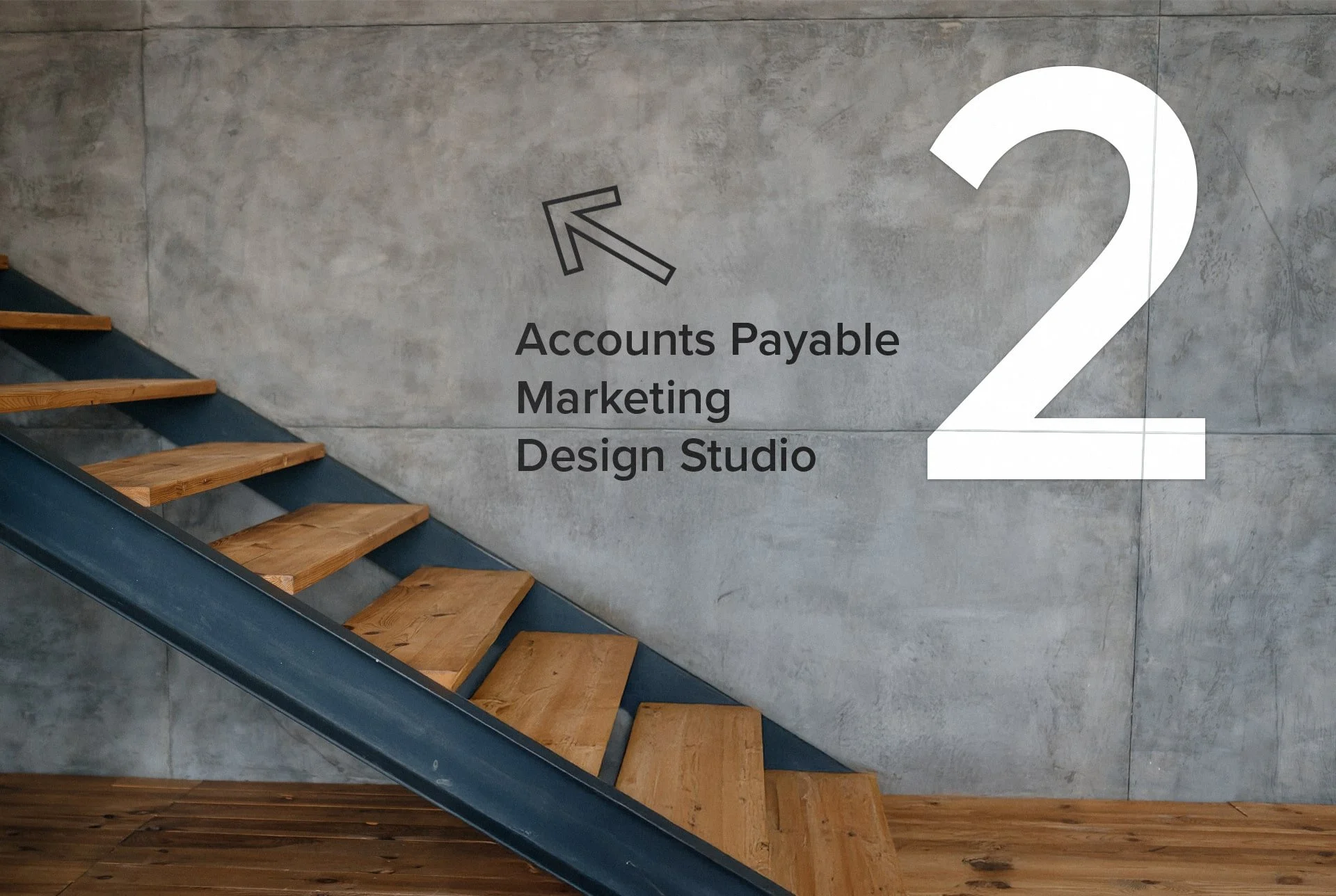
One of the simplest and most versatile materials in signage, cut vinyl lettering is ideal for clean, minimalist directions. Applied directly to walls, doors, or glass, it allows precise placement and legibility without the need for additional panels.
Vinyl is available in a broad range of colours, textures, and finishes — from matte to metallic, making it easy to match your brand style. It’s especially well suited for modern offices or retail spaces where minimalism and clarity are valued.
Vinyl Wall Wraps
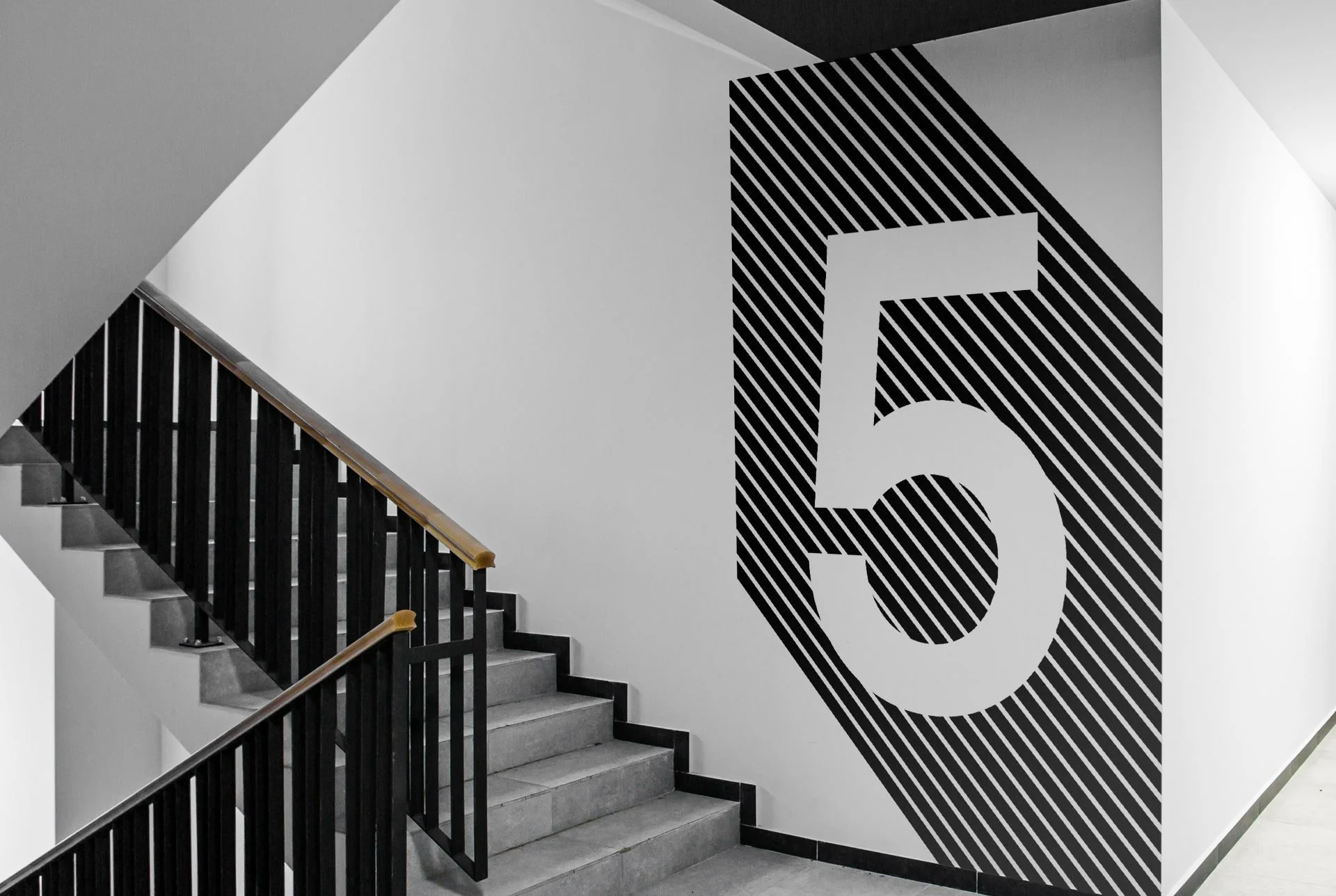
Large-scale wall graphics are often used for storytelling or branding, but they’re equally effective for wayfinding. A wall wrap can incorporate directional arrows, floor numbers, or location-based information into a cohesive mural, blending navigation with visual interest.
This is ideal in corridors, stairwells, or large open-plan environments where standard signage might feel disconnected or overly small. With the added benefit of hiding imperfect wall surfaces or creating zones within open interiors, wall wraps are both expressive and functional.
3D Lettering for Depth and Permanence
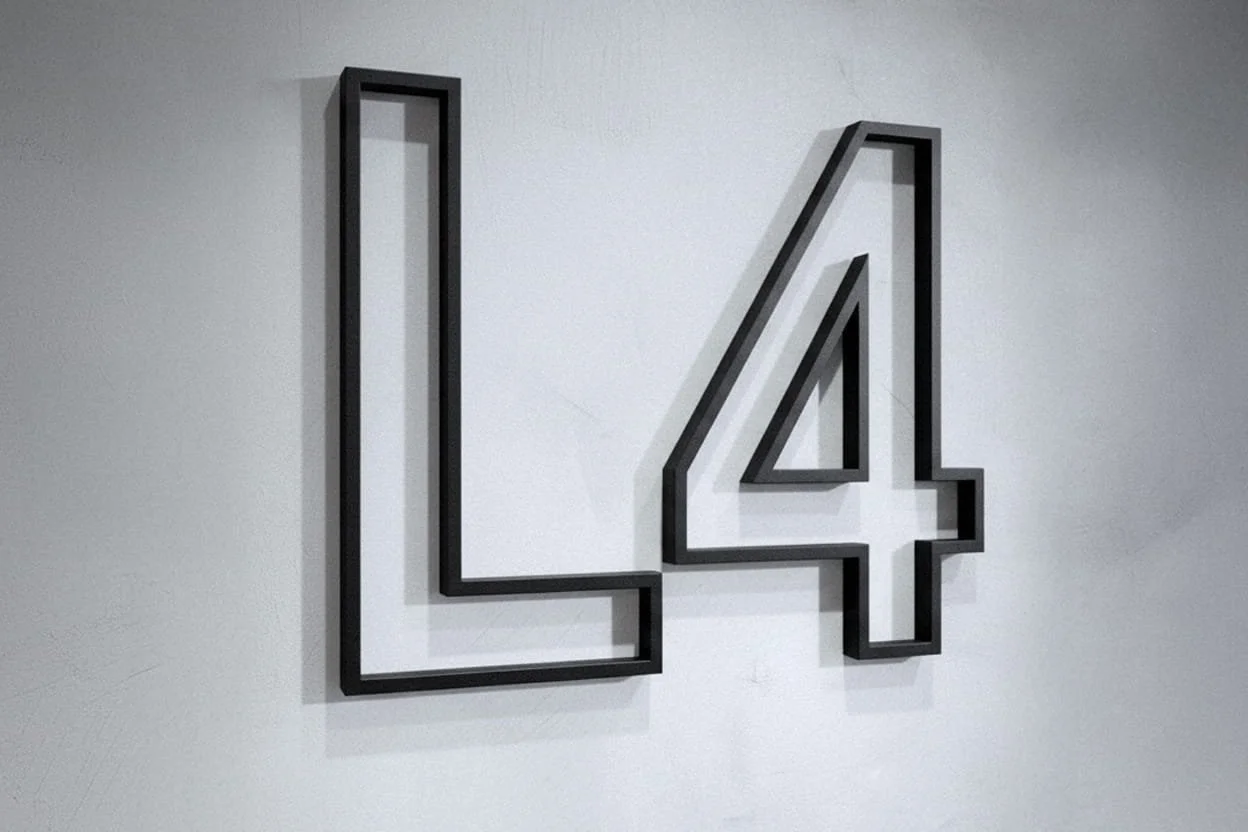
For a more tactile solution, 3D lettering offers a strong visual impact and sense of permanence. Letters can be produced in materials like acrylic, aluminium, or wood, with a variety of finishes from gloss to brushed metal.
These can be installed flat to a wall or raised using standoffs to create shadow and depth. Ideal for building names, directional arrows, or room identifiers, 3D letters create a professional and architectural presence that stands out, especially in corporate or hospitality settings.
Minimalist Pictograms
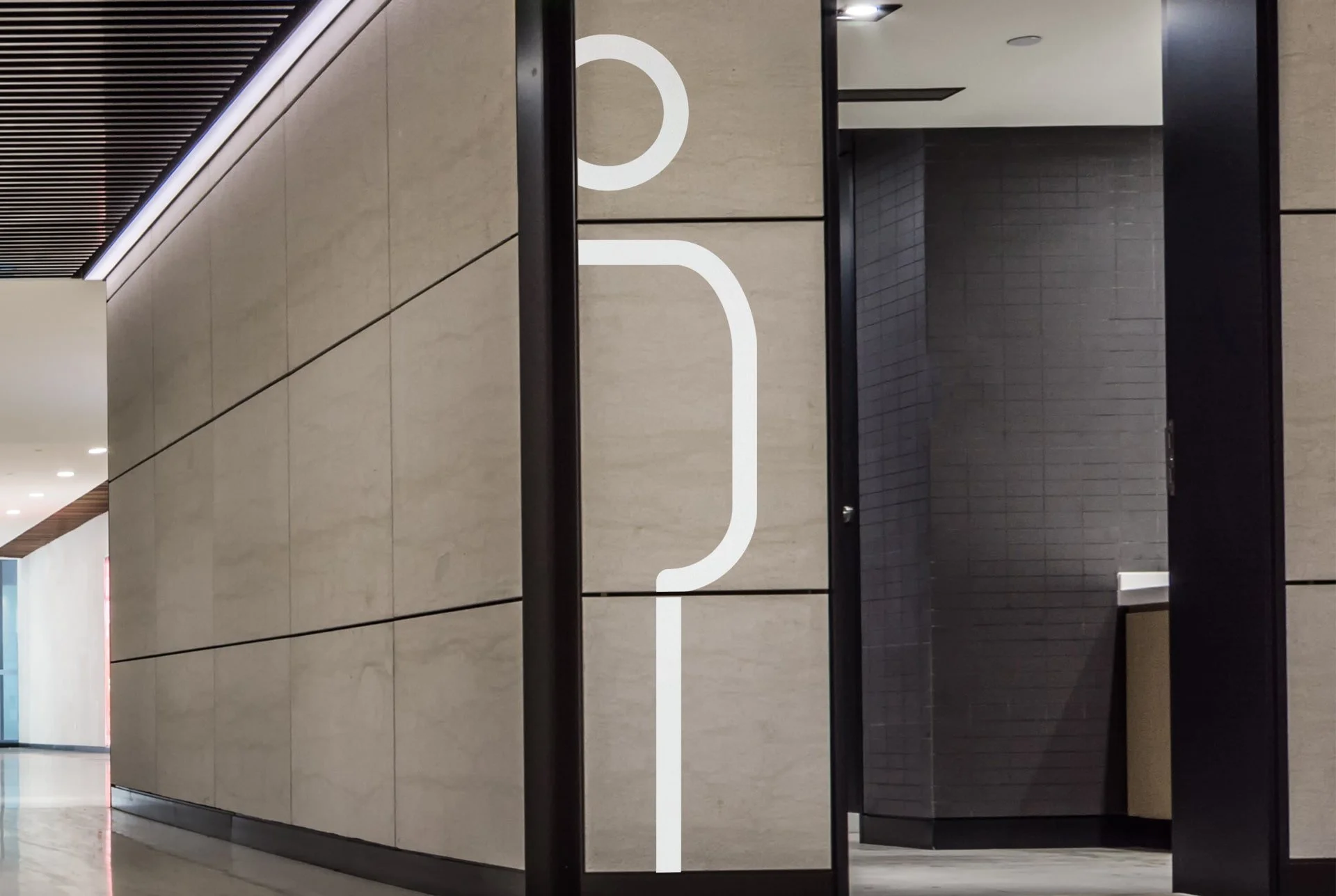
Pictograms are often overlooked as creative elements, but they offer strong visual clarity, especially in multilingual environments. Simplified, custom-designed icons can replace or support written directions and can be laser-cut, digitally printed, or applied in vinyl.
Minimalist pictograms add a touch of design consistency and reduce cognitive load for users, particularly in high-traffic or fast-paced areas like hospitals, transport hubs, or busy retail floors.
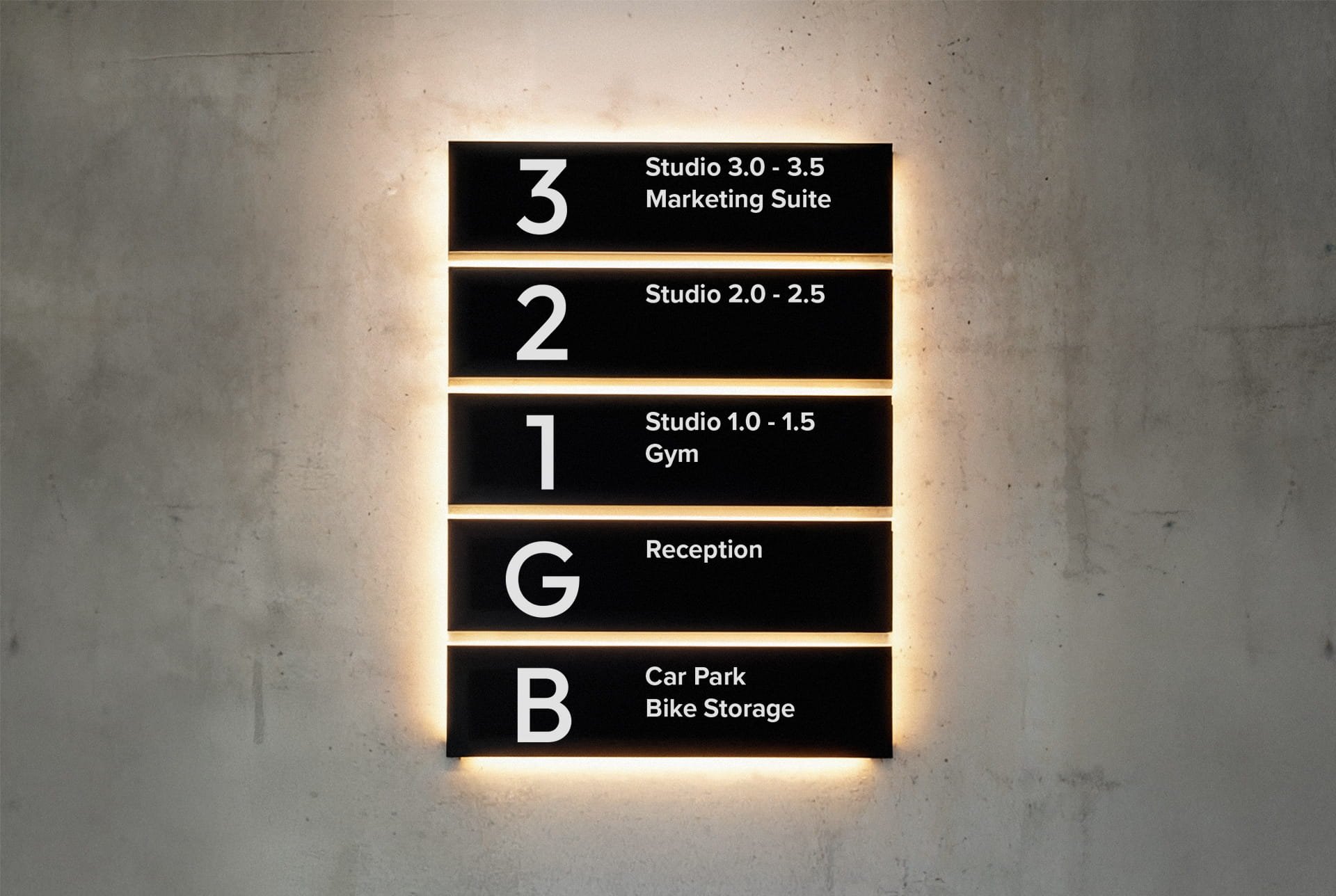
Illuminated Lightbox Directory Signs
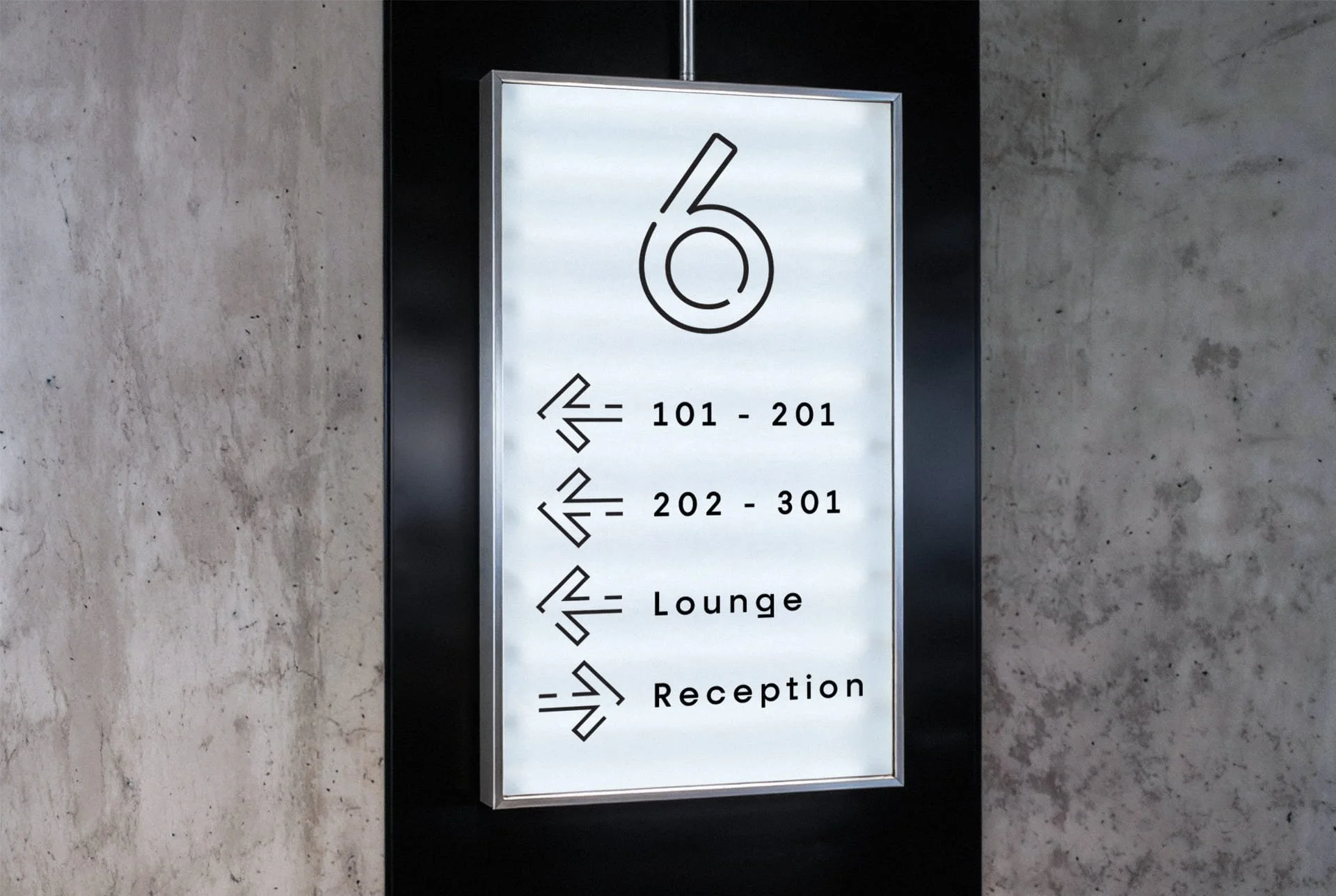
Illuminated lightbox directories are a bold and highly legible solution, especially effective in low-light conditions or high-traffic environments. These systems use internal LED lighting to illuminate printed or vinyl-applied graphics from behind, providing both visibility and sophistication.
They’re particularly suitable for multi-tenant buildings, shopping centres, medical practices, or hospitality venues where clear information and nighttime readability are essential. The light enhances not just practicality but also perceived quality, giving a polished, professional finish that supports the overall brand environment.
Modular Tray Signage Systems
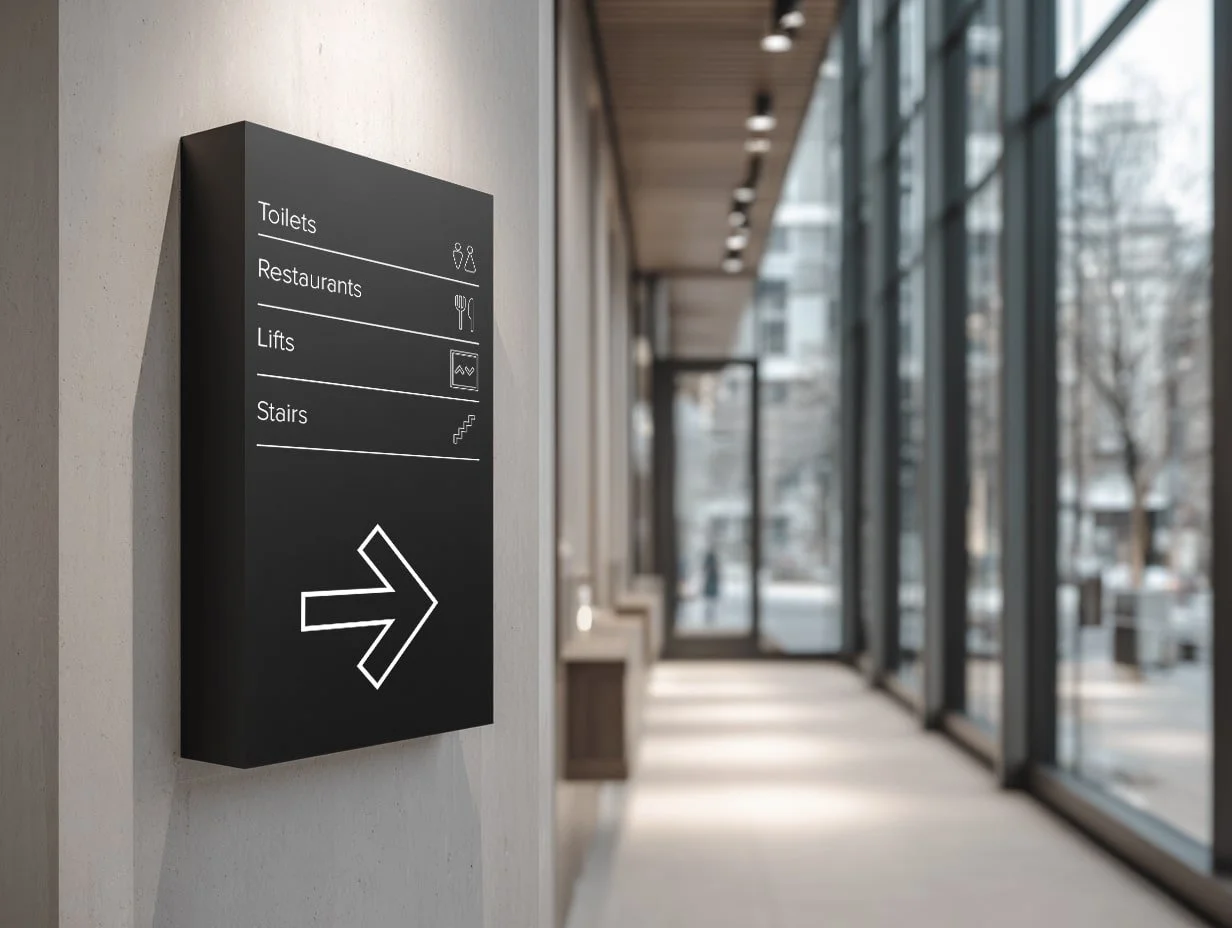
For environments that require flexibility or frequent updates, modular tray systems provide a highly practical solution. These consist of interchangeable trays or panels fixed to a frame, allowing new information to be slotted in without disrupting the full sign structure.
They can be powder-coated to match brand colours, fitted with vinyl graphics, or engraved depending on the material. The modular nature also makes these ideal for educational campuses, corporate buildings, or any space where departments or layouts change often.
Materials & Layout Ideas for Modular Systems
Brushed aluminium trays with digital print overlays
Powder-coated steel frames with removable slats
Wall-mounted or freestanding units with clear divisions for multiple destinations
Projectors
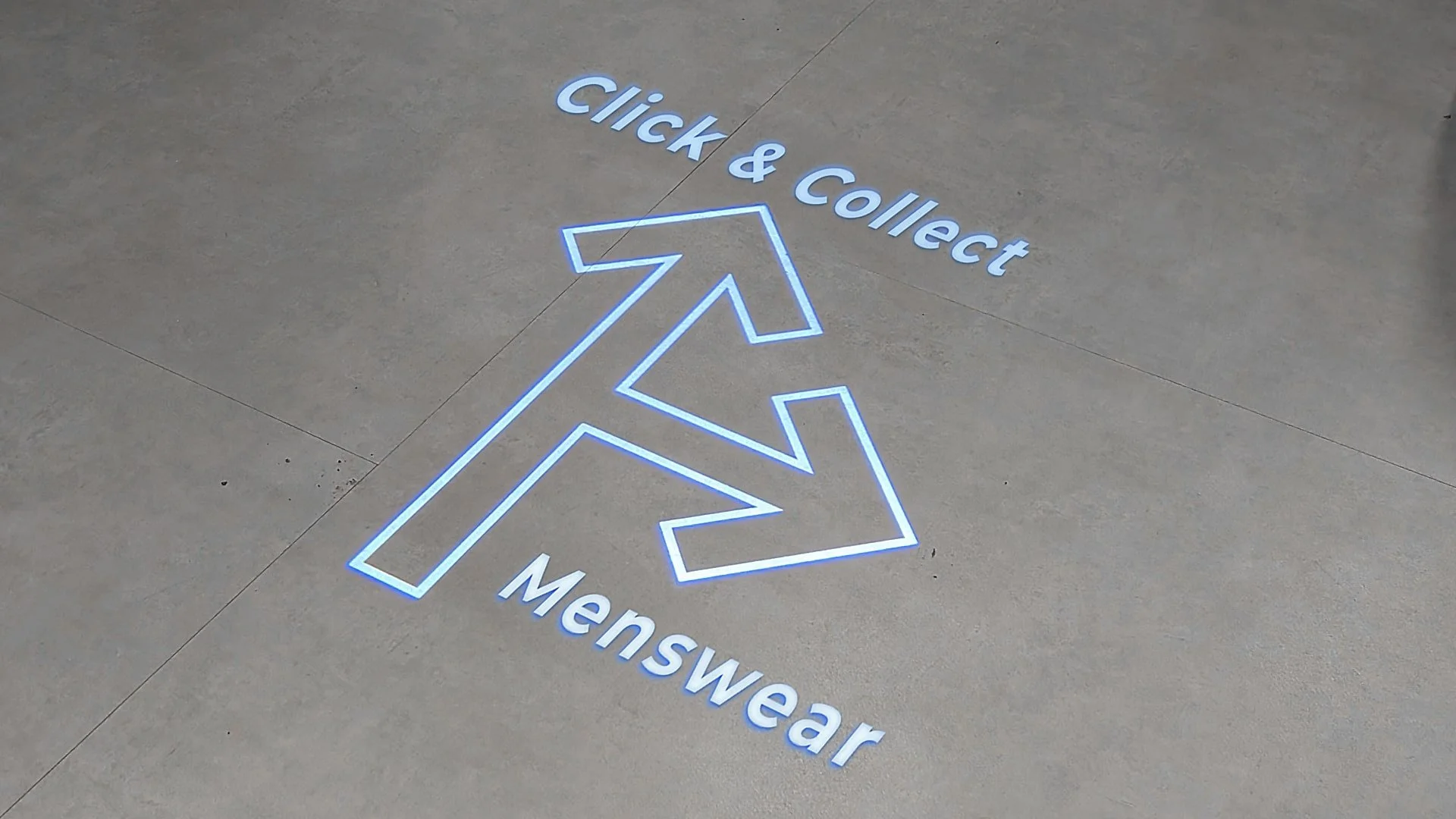
One of the more unexpected solutions for wayfinding signage, projectors can display arrows, symbols, or even animations directly onto the floor or walls. These are ideal for temporary wayfinding setups, subtle night-time signage, or modern, high-tech environments.
Projection signage can be custom-programmed and changed without replacing any physical components. It’s useful in retail, hospitality, or events where dynamic movement or zoning is needed, and it offers a clean, uncluttered alternative to floor vinyl.
Projecting Signs with Bespoke Finishes
When visibility from a distance or around corners is required, projecting signs are essential. Instead of defaulting to standard lightboxes, more bespoke projecting signs can reflect your brand’s tone and elevate the visual landscape.
Materials like reclaimed timber, stainless steel, or CNC-routed acrylic can bring texture, tone, and material contrast into your space. With options for illumination (external or internal), layered shapes, and branded iconography, projecting signs are both practical and expressive.
Considerations for Layout and Journey Planning
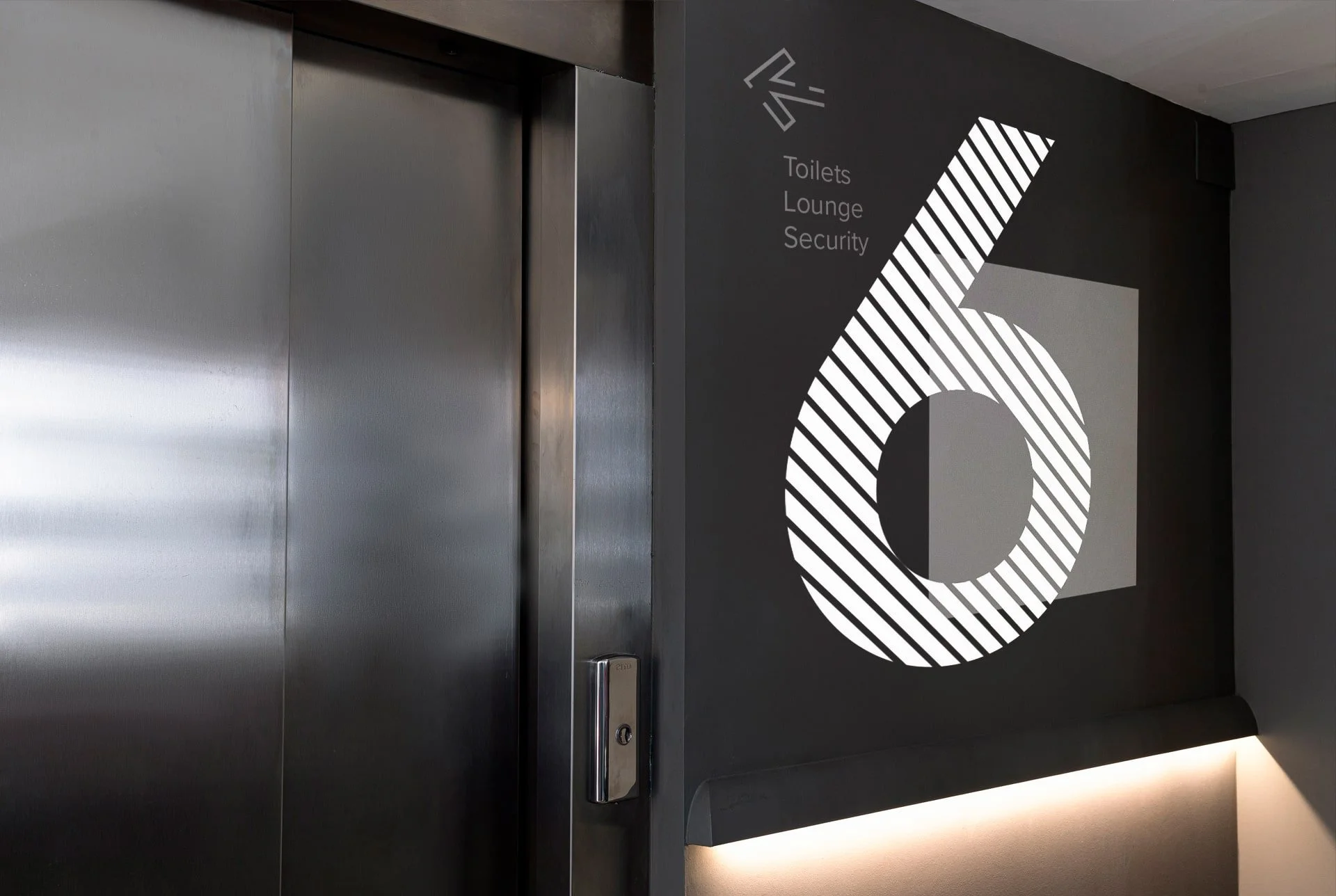
Beyond aesthetics, wayfinding success relies on correct placement and logical flow. Creative signage is only effective when it leads people where they need to go without confusion.
To plan an effective wayfinding system:
Map out the full visitor or staff journey from entry to destination
Identify decision points — where someone might pause or need direction
Ensure consistency in iconography, colour coding, and hierarchy
Factor in sight lines, lighting, and accessibility at each placement location
Overdesigning the signage or making it too decorative without prioritising clarity can lead to frustration. Function must always lead, with creativity layered in to enhance.
How Grafiscape Delivers Creative, Bespoke & Practical Wayfinding Solutions
At Grafiscape, we approach wayfinding signage as both a branding opportunity and a design challenge. Our team combines strategic placement planning with creative fabrication to ensure every sign looks great and performs its purpose.
We work with businesses across retail, corporate, healthcare, and hospitality sectors to design systems that are accessible, on-brand, and visually coherent. Every sign, from simple vinyl labels to complex modular installations, is planned with layout logic, accessibility, and durability in mind.
By combining branding expertise, in-house production, and installation capabilities, we manage the entire process, ensuring no design intent is lost along the way.
Final Thoughts
Creative wayfinding signage doesn’t have to sacrifice clarity. When designed intentionally, your signage can guide visitors while reinforcing your visual identity and enhancing the overall experience of your space.
From subtle cut vinyls and integrated wall graphics to advanced projection systems and bespoke 3D lettering, the right combination of materials and design approach can make a lasting impression.
If you’re planning a new space or looking to refresh your current signage, Grafiscape can help deliver a solution that balances function, creativity, and brand consistency.
