

First Impressions Start Outside: The Role of Exterior Business Signage

For most businesses, the first interaction with a brand does not happen on a website or inside a meeting room. It happens outside the building. Exterior signage is often the first physical touchpoint customers, clients, and visitors encounter. Before anyone steps through the door, the quality, clarity, and design of a sign already communicate something about the company behind it.
Well-designed exterior signage acts as a silent introduction. It confirms that the business is established, visible, and confident in its presence. Poor signage, outdated graphics, or unclear branding can create uncertainty before a visitor even enters the premises.
In busy urban environments, signage is not only about branding. It is also about visibility. Buildings compete for attention along high streets, office districts, and commercial estates. A clearly designed external sign ensures that a business is easy to locate, recognisable from a distance, and consistent with its overall brand identity.
Why Exterior Signage Matters
Exterior business signage performs several important roles simultaneously. It identifies the business, reinforces brand identity, and guides people to the correct location. When executed properly, it becomes a permanent marketing asset that works continuously without ongoing advertising costs.
Unlike digital marketing, which depends on algorithms or budgets, physical signage operates 24 hours a day. Every passerby becomes a potential impression. Whether someone is walking past, driving by, or searching for a meeting location, the sign is doing its job.
A strong exterior sign can achieve several objectives at once:
Establish credibility and professionalism
Improve visibility from distance or across a street
Reinforce brand recognition through colour, typography, and logo placement
Help visitors confirm they have arrived at the correct location
Strengthen the building’s identity within the surrounding environment
Businesses that invest in quality exterior signage often benefit from stronger local recognition. Over time, the sign becomes part of the neighbourhood landscape and part of how people remember the brand.
The Psychological Impact of First Impressions

Research consistently shows that people form first impressions extremely quickly. Within seconds of seeing a building or storefront, visitors begin to make assumptions about professionalism, quality, and reliability.
Exterior signage plays a large role in shaping those impressions. Clean typography, balanced proportions, and appropriate materials communicate attention to detail. A well-positioned sign feels intentional and considered. In contrast, poorly installed signage, faded graphics, or inconsistent branding can suggest neglect.
For professional services firms, technology companies, consultancies, and legal offices, this perception matters greatly. Clients often associate visual quality with business standards. When the exterior presentation feels organised and confident, the company itself appears more trustworthy.
Visibility and Wayfinding
Beyond brand perception, signage serves a practical purpose. It helps people find the business easily.
This becomes particularly important in commercial districts, shared office buildings, or industrial estates where multiple companies operate in close proximity. Without clear business or wayfinding signage, visitors may struggle to locate the correct entrance or even identify the building.
Effective exterior signage improves navigation by providing:
Clear brand identification
Visible positioning from key approaches
Legible typography at appropriate scale
Simple contrast between background and lettering
The goal is not simply to display a name, but to ensure the sign can be read and recognised quickly from the perspective of someone approaching the building.
Choosing the Right Exterior Sign Format
Exterior signage can take many forms depending on the building type, planning constraints, and brand identity. Each format offers a different balance of visibility, durability, and design expression.
Common exterior signage solutions include:
Tray Signs
Folded aluminium trays provide a clean, modern appearance with concealed fixings. Graphics can be applied using vinyl or printed panels, allowing flexibility in colour and design.
Fret-Cut Signs
Letters or logos are cut directly into the sign face, often paired with internal illumination. This approach creates depth and a premium finish while allowing controlled lighting.
Panel Signs with Raised Lettering
A simple panel with stand-off lettering offers a refined appearance suitable for corporate environments. The layered effect creates shadow and dimension.
Metal Signs and Architectural Panels
Brushed stainless steel, aluminium, or powder-coated panels provide a durable and sophisticated aesthetic. These materials work well for offices, legal firms, and professional consultancies.
Illuminated Signs
Illumination ensures visibility during evening hours and enhances brand presence. Backlit letters or illuminated trays can create a distinctive look without overwhelming the building.
Each solution must be chosen with consideration for the building’s architecture, the surrounding environment, and planning regulations.
Material and Durability Considerations

Outdoor signage must withstand weather conditions throughout the year. Rain, UV exposure, temperature changes, and pollution can all affect the longevity of materials.
For this reason, exterior signs typically use robust materials such as aluminium composite panels, stainless steel, powder-coated metals, and high-performance vinyl films. These materials maintain colour stability and structural integrity over time.
Durability also depends on installation quality. Proper fixings, sealed edges, and careful alignment ensure the sign remains secure and visually consistent for many years.
Businesses often underestimate how long signage will remain in place. In many cases, exterior signs remain unchanged for a decade or longer, making quality fabrication and installation particularly important.
Exterior Signage and Brand Identity
Exterior signage should always reflect the company’s brand identity. Typography, colour palette, and proportions should align with other brand materials such as websites, printed collateral, and interior graphics.
Consistency strengthens brand recognition. When visitors see the same design language across different touchpoints, the brand feels cohesive and established.
For example, a business using minimal typography and muted colours online should avoid overly complex signage outside the building. Likewise, brands built around bold visual identity can reinforce their character through confident signage design.
Exterior signage therefore becomes a physical extension of brand guidelines rather than a separate design element.
Planning and Regulatory Considerations
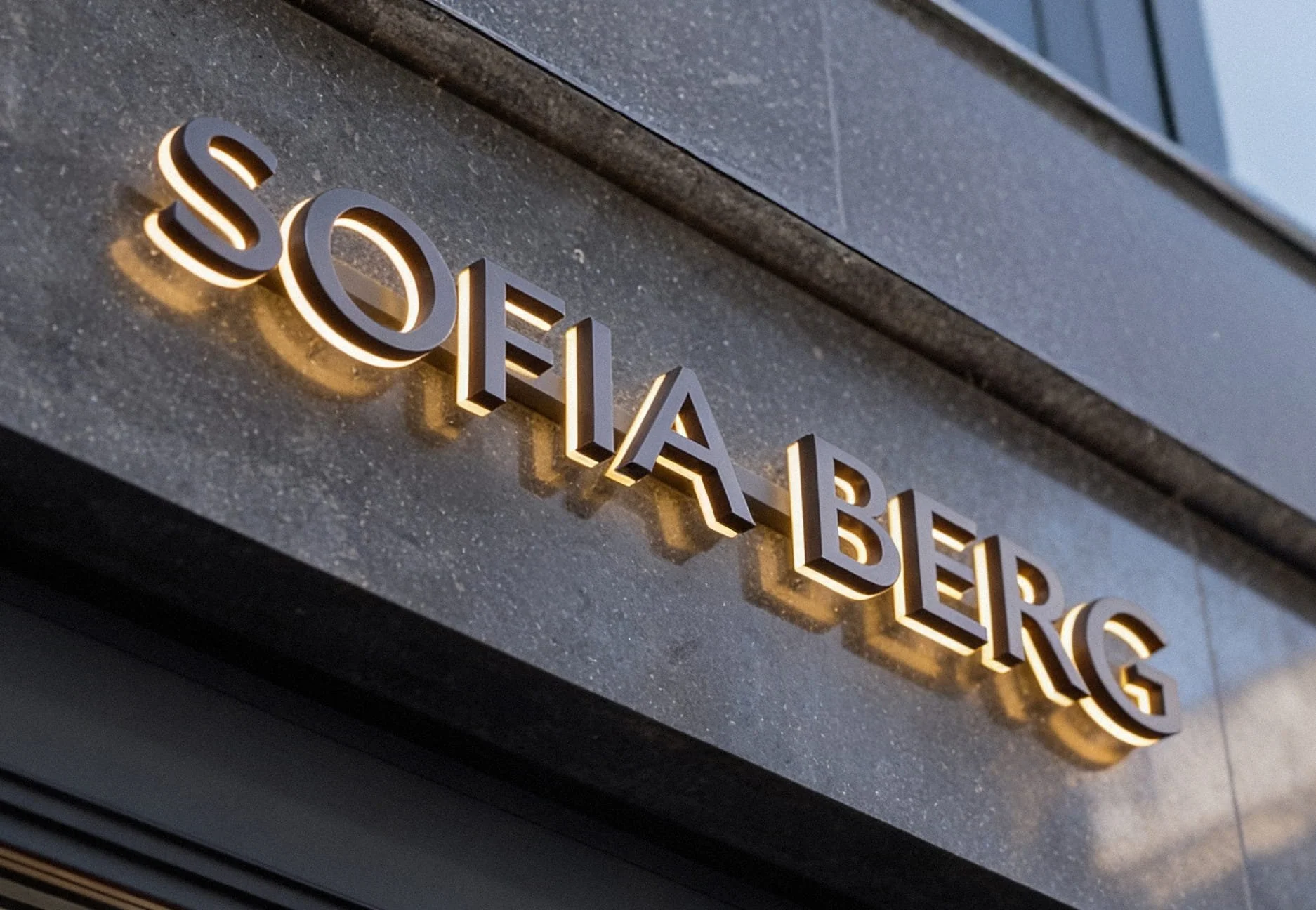
In many locations, exterior signage, including illuminated signs, is subject to local planning regulations. These rules are designed to protect visual amenity and public safety.
Depending on the size, illumination, and position of the sign, advertisement consent may be required. Buildings located in conservation areas or listed properties often face stricter guidelines.
Typical considerations include:
Sign size relative to the building facade
Illumination levels and operating hours
Positioning above entrances or windows
Impact on neighbouring buildings or streetscape
Planning requirements vary by local authority, so consulting a signage specialist early in the process can prevent delays or redesigns later.
A Brief Note on Interior Signage
While exterior signage introduces the brand, interior signage continues the experience once visitors enter the space. Reception signs, illuminated logos, wall graphics, and wayfinding systems reinforce identity and help guide people through the building.
Illuminated interior signage is particularly effective in reception areas, where it creates a clear focal point and confirms arrival. Combined with subtle graphics and directional signage, interior elements ensure the brand experience remains consistent from outside to inside.
However, the exterior sign remains the first and most important visual moment in that journey.
The Long-Term Value of Quality Signage
Unlike many forms of marketing, signage is a long-term asset. Once installed, it continues to work without recurring costs, delivering visibility and brand reinforcement every day.
For businesses operating from physical premises, signage supports both brand awareness and practical navigation. It helps customers find the location, reinforces professionalism, and strengthens the building’s identity in its surroundings.
Investing in well-designed signage therefore delivers value far beyond aesthetics. It contributes to perception, trust, and recognition.
A Visible Statement of Who You Are
Exterior signage is more than a name on a wall. It is a statement of presence.
A clear, well-crafted sign signals confidence. It shows that a business understands its identity and cares about how it is perceived. When visitors approach a building and immediately recognise the brand, the signage has already achieved its purpose.
First impressions always start outside. When exterior signage is designed and installed with care, it ensures that the introduction is the right one.
